2026-08-29 ·
How Lowcountry Humidity Affects Your Water Heater's Lifespan
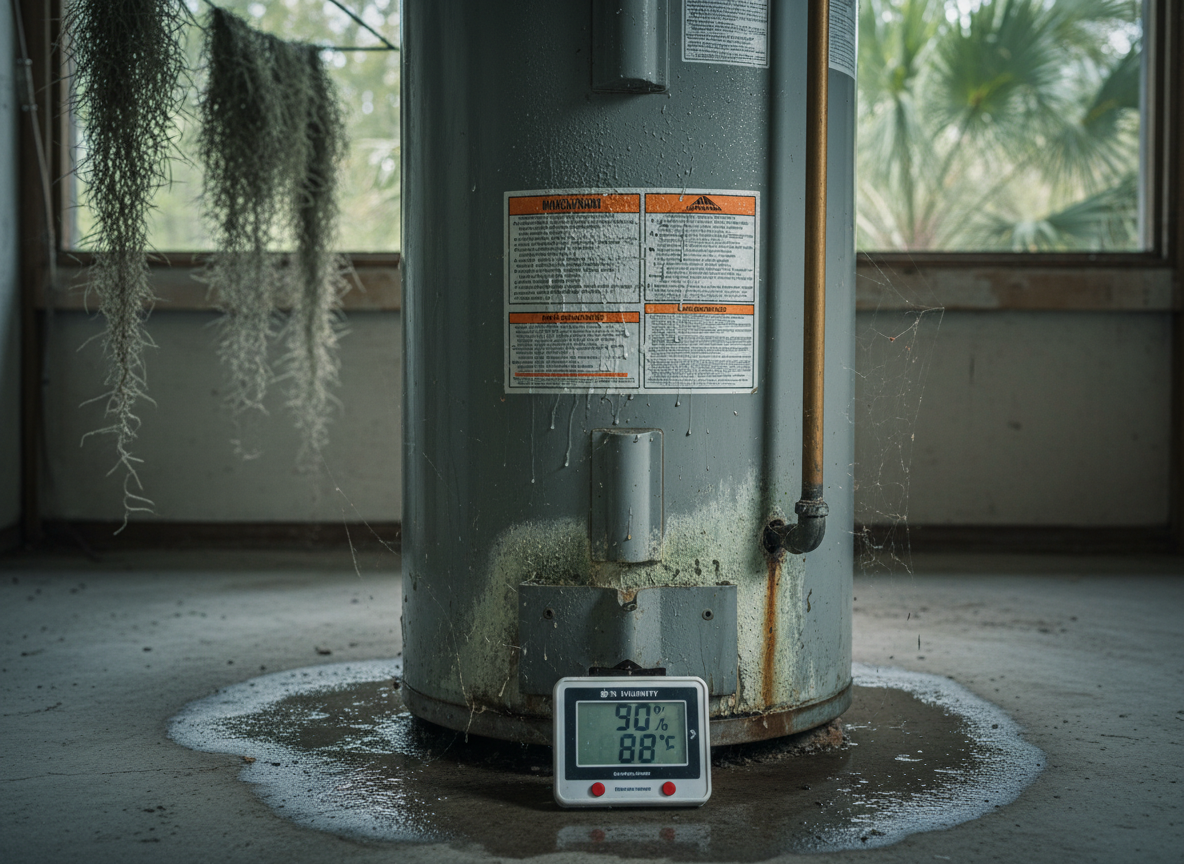
In Summerville's humid subtropical climate, constant moisture shortens a typical water heater lifespan from the 8–12 year range down to 6–9 years through faster tank corrosion and anode rod depletion.
Condensation Buildup on Tanks and Pipes
Year-round humidity in Dorchester County creates daily temperature swings that cause condensation on the exterior of 40-gallon and 50-gallon tanks. This moisture drips onto fittings and the base, promoting rust that eats through the glass-lined steel in older homes. In mild winters when groundwater stays around 60 degrees, the effect compounds because the tank never fully dries. Residents in The Ponds and Cane Bay report seeing pinhole leaks on the cold-water inlet within seven years on units installed without dielectric unions. Proper venting and regular anode checks become essential because the humid air prevents natural evaporation that might occur in drier inland counties.
Effects on Homes in Historic and Established Neighborhoods
Older housing stock in the Summerville Historic District and Flowertown often features crawl spaces with limited airflow, trapping moist air around water heaters for months. These conditions accelerate scale on heating elements in electric models and corrode gas burner assemblies faster than in newer subdivisions. Nearby Charleston and North Charleston share the same subtropical pattern, yet Summerville's slightly inland location still delivers enough salt-laden air from the coast to speed external oxidation on exposed piping. Homeowners replacing units in these areas frequently upgrade to models with enhanced anode rods or switch to tankless systems to avoid repeated repairs in the same damp locations.
How Humidity Changes Maintenance Needs
Standard 6-year anode rods in Summerville homes often deplete in 3–4 years because dissolved oxygen in the air and water works together on the magnesium. Checking the rod each spring before hot summers begin prevents the tank wall from becoming the next anode. Flushing sediment quarterly removes minerals that humidity helps concentrate at the bottom of the tank. For gas units, cleaning the burner and flue annually stops corrosive condensate from forming inside the draft hood during humid nights. These steps directly address the moisture-driven failures common across Dorchester County rather than generic national advice.
When Replacement or Tankless Conversion Makes Sense
Once a tank shows external rust streaks or the anode is gone, replacement usually occurs 2–3 years earlier than the manufacturer's rating because humidity has already thinned the lining. Many homeowners in Cane Bay and The Ponds choose tankless water heater installation to eliminate the stored-water corrosion problem entirely. Tankless units still require annual descaling in this climate but avoid the large tank surface area that collects condensation. When a unit fails suddenly, water heater repair technicians can often extend service life temporarily with a new anode and dielectric nipples while a replacement is planned.